
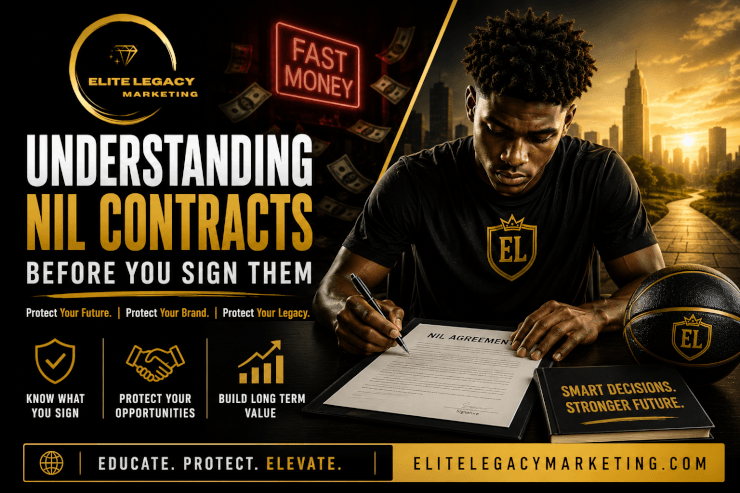

For many athletes, the first NIL offer feels like validation. Someone sees value in their name, image, and influence. That excitement is real, especially for young athletes who have spent years putting time into their sport without financial opportunities attached to it.
But excitement can also lead to rushed decisions.
One of the biggest mistakes athletes make in NIL is signing agreements they do not fully understand. The money, free gear, social media attention, or promise of exposure can make a deal look great at first glance, but contracts are legal business agreements. Once signed, those terms can impact future opportunities long after the initial excitement fades.
A common example involves exclusivity clauses. An athlete may sign with a local clothing company for a small payment without realizing the agreement prevents them from promoting any competing apparel brand for the next 12 months. If a larger opportunity comes later, the athlete may legally be unable to participate.
Another growing issue involves content ownership. Some NIL agreements include language allowing companies to use an athlete’s photos, videos, or promotional content indefinitely. That means a business could continue using an athlete’s image years later without additional compensation. Terms like “in perpetuity” are especially important to understand because they can permanently transfer usage rights.
Payment structures also matter more than many athletes realize. Some contracts promise compensation tied to performance metrics, engagement numbers, or deliverables that are never clearly explained. Others delay payments for months or contain vague language that makes enforcement difficult.
These are not rare situations. As NIL continues to grow, more businesses, collectives, agencies, and third party representatives are entering the space. While many operate professionally, others take advantage of athletes who simply do not yet have business experience.
That part is important to acknowledge honestly.
Most high school and college athletes are not trained to interpret legal language, negotiate contract terms, or understand intellectual property rights. They are balancing academics, sports, family expectations, recruiting pressure, and social media visibility all at once. Expecting every athlete to naturally understand contracts without guidance is unrealistic.
That is why education matters.
According to the NCAA, student-athletes are responsible for complying with NIL rules and understanding the agreements they enter into. At the same time, several states and universities now encourage or require NIL education programs focused on financial literacy, contracts, taxes, and professional development because of the growing complexity surrounding NIL opportunities.
The athletes who usually succeed long term are not always the ones signing the fastest deals. They are often the athletes building relationships carefully, protecting their reputation, and thinking beyond immediate money.
Elite Legacy Marketing focuses on helping athletes approach NIL with structure, education, and long term strategy instead of emotional decision-making.
The goal is not simply to help athletes get deals. The goal is to help athletes protect their future while learning how to operate professionally in a growing business environment.
Elite Legacy Marketing helps athletes:
There is also a human side to this process that often gets ignored.
Many athletes feel pressure to capitalize on opportunities immediately because they fear another offer may never come. Families sometimes feel financial pressure as well. That urgency can create situations where short-term thinking overrides long-term planning.
But every partnership becomes part of an athlete’s reputation.
Businesses notice professionalism. Coaches notice maturity. Future partners notice how athletes handle communication, deadlines, branding, and relationships. NIL is no longer just about visibility. It is about trust.
Athletes who learn how to move professionally now are building skills that will help them far beyond sports.
Before signing your next NIL agreement, take the time to fully understand what is being offered and what rights may be attached to it.
Protect your future before chasing fast money.
Visit Elite Legacy Marketing to learn how athletes, parents, and families can build NIL opportunities the right way through education, strategy, and long-term planning.